
Surry County Sex Offender Checks
The North Carolina Sex Offender and Public Protection Registry is the main public search channel for Surry County. The SBI displays information that county sheriffs enter and verify. A profile is not a full rap sheet, and a blank search is not proof that a person has no criminal record. The registry covers people who are subject to public registration under North Carolina law. The Surry County court system remains the source for the underlying case and its judgment.
Start with the search mode that answers the real question. A name search helps locate a known person. County and city filters give broader local context. An address search looks for registered residences near a place, while coordinates can help when a rural Surry County location does not map cleanly. A registration number points to one known record. Check the profile's status, address, offense data, and update details rather than relying only on a pin or result-list photo.
The official registry search form places those public options in one system.
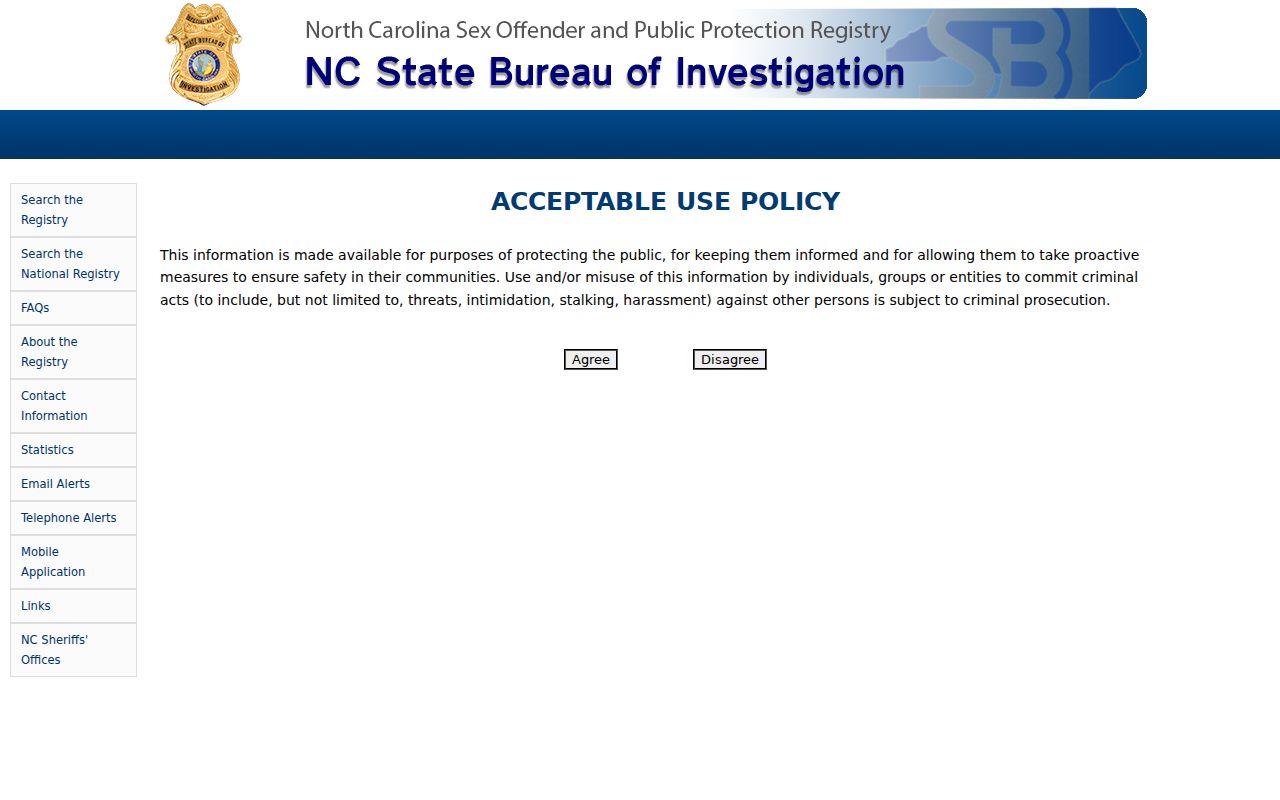
Its controls let a resident move from a broad Surry County search to the relevant public profile.
Surry County Registry Roles
Two government roles sit behind the public result. The Surry County Sheriff's Office receives local registrations, address changes, and required verification information from people who reside in the county. The SBI maintains the public website from sheriff-entered data. That split explains why a suspected address error should be reported to the sheriff or SBI instead of handled through personal contact.
North Carolina guidance covers residents with reportable convictions, incoming residents with qualifying out-of-state convictions, nonresident students, and nonresident workers. Each person must comply with the duties that apply to that category. Surry County registration-office hours, location, appointment rules, and any local intake process should be confirmed through the Sheriff's official site. No local fee should be assumed when one is not published.
Surry County Sheriff's Office
Local registration, verification, address-change, and suspected noncompliance questions
336-401-8900
Confirm the current registration counter and hours before visiting.
North Carolina Sex Offender and Public Protection Registry Searches
The registry offers several paths because names and locations answer different questions. Use Surry County as the county filter for a countywide list. Use a street address and radius to check the area around a home, school route, park, or other place tied to family safety. Exact radius options can change, so read the live control rather than relying on an old screenshot.
- Open the official SBI registry and review its conditions of use. Select the address, offender, coordinate, or registration-number mode.
- Enter the available facts. For a county list, choose Surry; for a proximity search, provide the address and a live radius choice.
- Review the result list. Use full name, physical descriptors, address, and registration number to distinguish records.
- Open the public profile and read the status, registration category, offense facts, and address data before reaching any conclusion.
| Search mode or field | Type | Use |
|---|---|---|
| Offenders Near an Address | Mode | Search from a geocoded street address |
| City, ZIP, Radius | Location fields | Define the place and live distance option |
| First and Last Name | Text | Find or narrow a known registrant |
| County | Dropdown | Select Surry for the local public list |
| Latitude and Longitude | Coordinate mode | Search around map coordinates |
| Sex Registration Number | Identifier mode | Open a record tied to a known number |
Search and Clear buttons run or reset the chosen mode. When a result is uncertain, change one field at a time instead of assuming a near match is correct. A county filter can confirm local registration, while address or coordinate modes answer proximity questions. Each mode should lead back to the same official profile before the information is used.
Surry County Registry Count Caveats
The SBI's live county statistics inspected in 2026 showed about 136 Surry County entries. That count is context, not a fixed population figure. The statistics page warns that sheriff-entered data can contain delays or errors, excludes pending statuses, and changes over time. A reader should cite both the source and inspection date rather than repeating 136 as a permanent fact.
Counts also do not measure crime trends, current danger, or the number of sex-offense court cases. Registration may last for decades, and a person can move between counties or states. The public list captures a statutory registration duty at a point in time. It does not replace the profile, the court judgment, or a current local safety report.
The official North Carolina registry statistics explains the source and its limits.
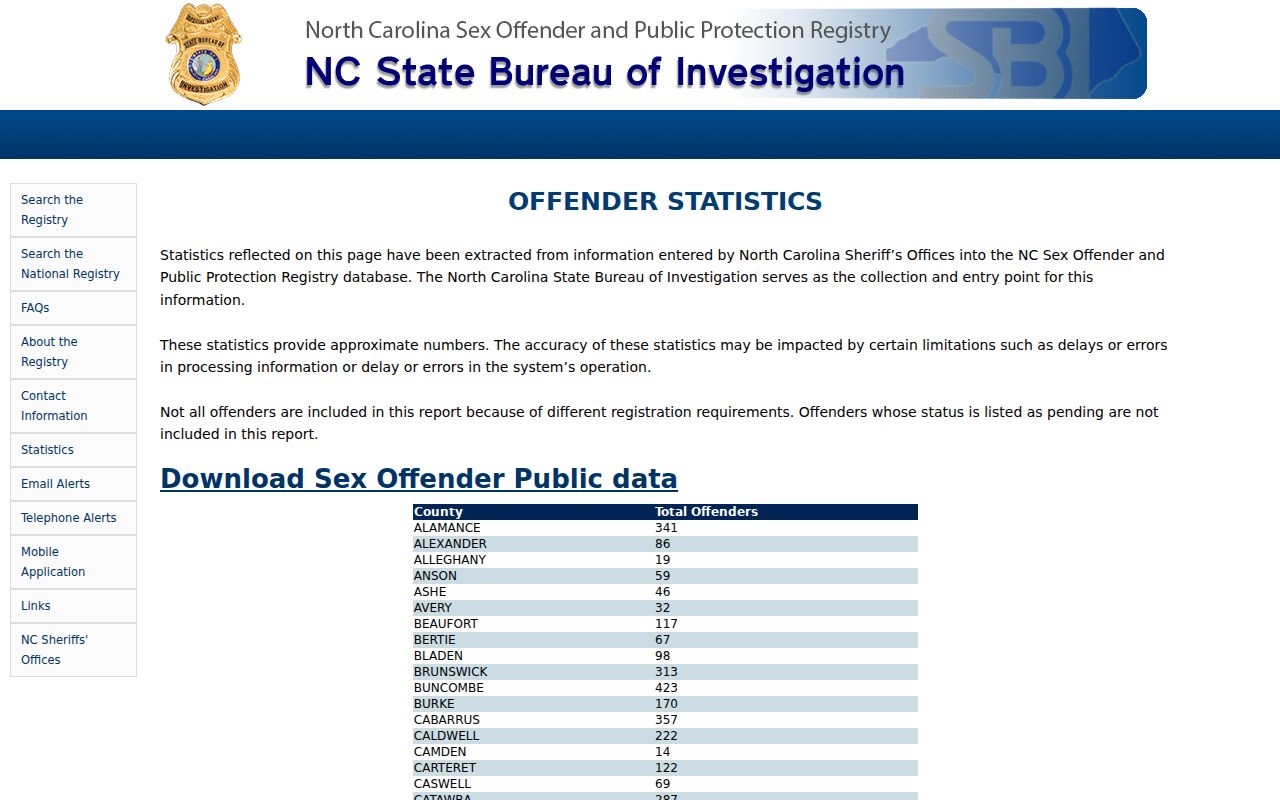
Note: Those warnings matter because the Surry County count changes as sheriffs add, verify, correct, or close registration records.
Registry Profiles: What They Show
A public profile presents registration data chosen by statute for community protection. It can identify the registrant and link that person to an address, status, registration category, and qualifying offense. Some fields vary by entry and by what the law permits. Read the whole record. A photograph alone cannot establish whether the address is current, whether a person is compliant, or what category applies.
| Identity | Registered name, aliases, sex registration number, and birth-date or age data as permitted |
|---|---|
| Appearance | Photograph, sex, race, height, weight, hair, eyes, and identifying marks |
| Location | Residential address, county, possible additional addresses, and map data |
| Offense | Description, conviction date or jurisdiction, and registration category |
| Status | Public registration status and verification details available for the entry |
| Other public fields | Vehicle, work, or school facts may appear when authorized and recorded |
A registry record is not a complete Surry County criminal history. It does not list every arrest, every court filing, or every person convicted of a sex offense. The court case file is the source for charges and disposition, while the registry shows the later civil registration record.
Surry County Registry Alerts
The SBI registry overview links email alert options for changes near an address. Alerts help a household notice a new or changed public registry entry. They are not a guarantee of safety, and they do not prove that a person outside the selected area is unregistered. Address quality and the selected radius shape the result.
VINELink serves a different purpose. It provides custody-status notification rather than registry proximity alerts. Someone tracking release or custody changes should use that service for its stated role, while using SBI alerts for public registration changes. Keeping the tools separate prevents a custody notice from being mistaken for a Surry County registry update.
The official registry overview shows the public search and alert framework.
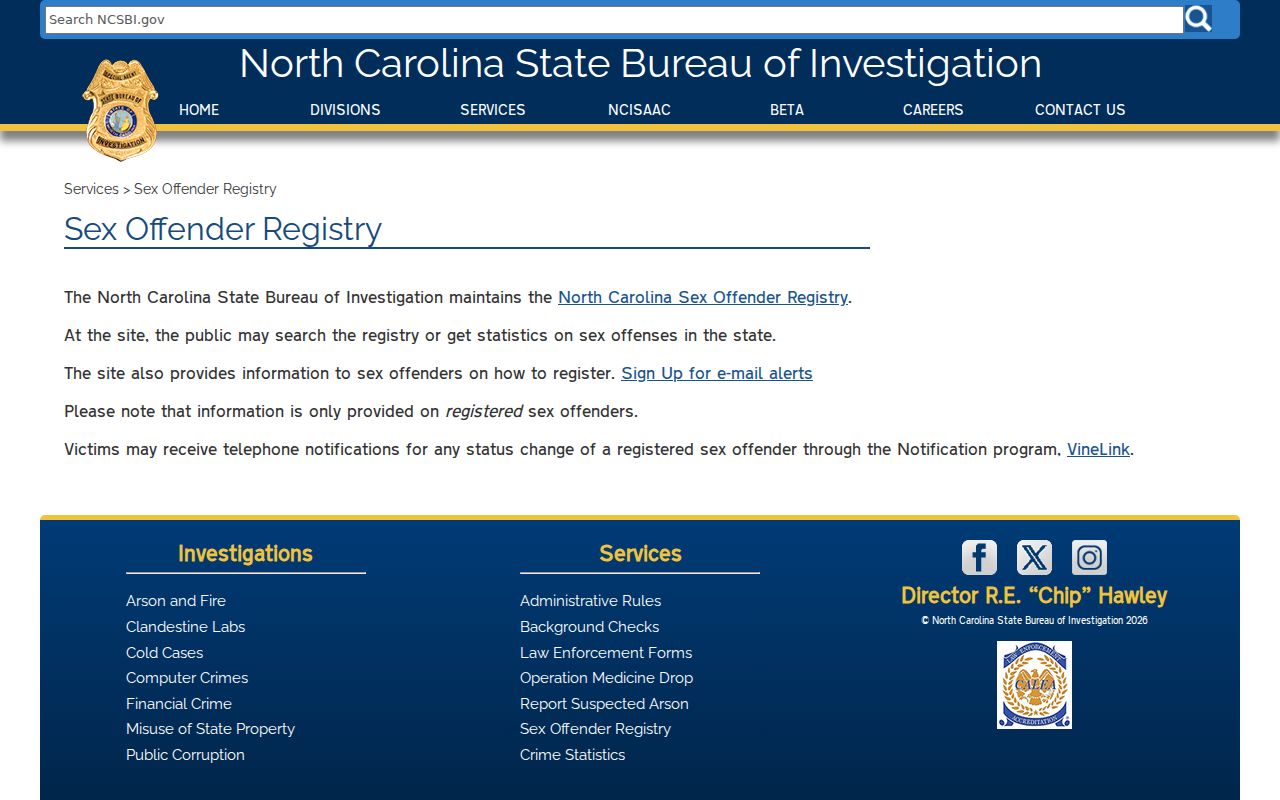
That distinction helps residents choose the right notification channel for a specific safety concern.
Registration Levels and Duties in North Carolina
North Carolina does not use a simple public Tier I, II, and III table for every registrant. State law distinguishes programs and classifications, each with its own term and process. The public profile and the case-specific legal record should control. A resident should not assign a generic tier based on the offense name or a search result.
| State category | General duration | Key limit |
|---|---|---|
| Part 2 reportable conviction | Generally 30 years from initial county registration | An eligible person may petition after 10 years; removal is not automatic |
| Sexually violent predator, recidivist, or aggravated offense program | Lifetime registration | Article 27A, Part 3 requirements apply |
| Satellite-based monitoring category | Case-specific | Separate court process; not a public registry tier |
| Juvenile registration | Separate statutory process | Juvenile registry information is not placed on the public Internet registry |
The North Carolina Article 27A governs registration, verification, petitions, and special programs. Duration rules can depend on the judgment and classification, so a live profile summary should not be used to give legal advice.
Surry County Registry Address Rules
G.S. 14-208.16 restricts certain covered registrants from living within 1,000 feet of property used for a school or child-care center, subject to statutory definitions and exceptions. G.S. 14-208.18 limits presence at certain premises for specified registrants. These rules are individualized. A map pin and a ruler do not settle whether a law applies.
If a Surry County address appears wrong or raises a possible compliance question, save the profile link and report the concern to the Sheriff's Office or SBI. State the address and the observed issue. Do not visit the residence or contact the person. Law enforcement can check registration facts and the statutory category without putting the reporting resident or household at risk.
Address concern: Report suspected noncompliance through official channels. Call 911 only for an immediate emergency, not for a routine registry correction.
Surry County and National Registry Searches
The National Sex Offender Public Website federates public data from participating jurisdictions. It is useful when an address search reaches beyond North Carolina or when a person may have moved across a state line. For a Surry County entry, the SBI profile remains the direct state source, and the sheriff remains the local verification office.
Search results can differ because jurisdictions publish different fields and update on different schedules. Compare the name, photograph, identifiers, location, and source jurisdiction. Do not assume that two similar names are the same person. When the national result links back to the state record, follow that source for the most direct public registration facts.
The U.S. Department of Justice national registry search provides that cross-state layer.
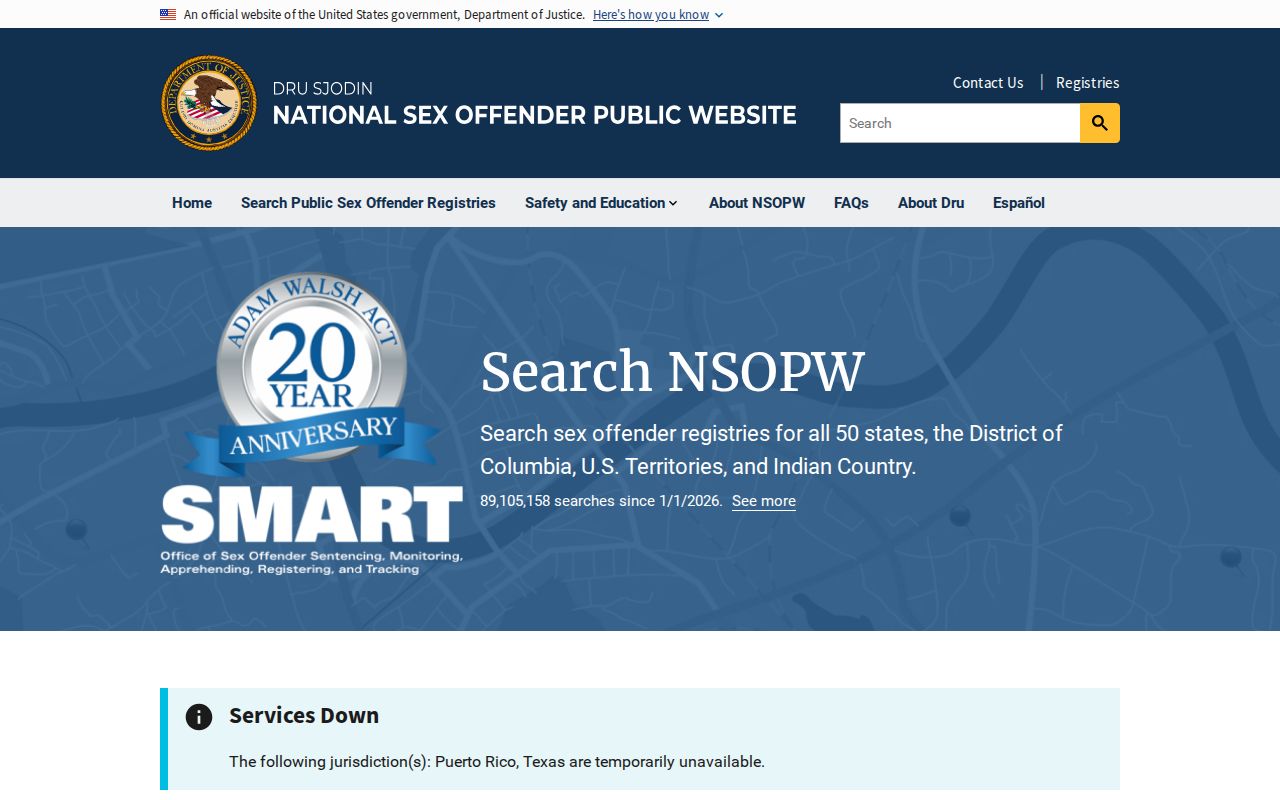
It broadens geographic coverage without replacing the SBI or Surry County Sheriff's local roles.
Using Registry Information Lawfully
Registry information exists for public protection and informed safety planning. Use it to understand an area, set family safety plans, sign up for official alerts, and report a fact that may need agency review. It does not authorize punishment, surveillance, public shaming, or direct enforcement by private people.
North Carolina G.S. 14-208.10 makes specified registry information public while setting the lawful public-access framework. If a Surry County profile looks stale, use the sheriff or SBI reporting path. For an emergency, call 911. For a question about the underlying conviction, use the Surry County court contact directory to reach the record custodian instead of treating the profile as a full criminal file.
Misuse is prohibited: North Carolina law forbids using registry information to threaten, intimidate, or harass a registrant or that person's household. Report suspected noncompliance to law enforcement and never confront the person.
Note: Public access supports awareness, but every profile must be read with care and verified through its official custodian.